
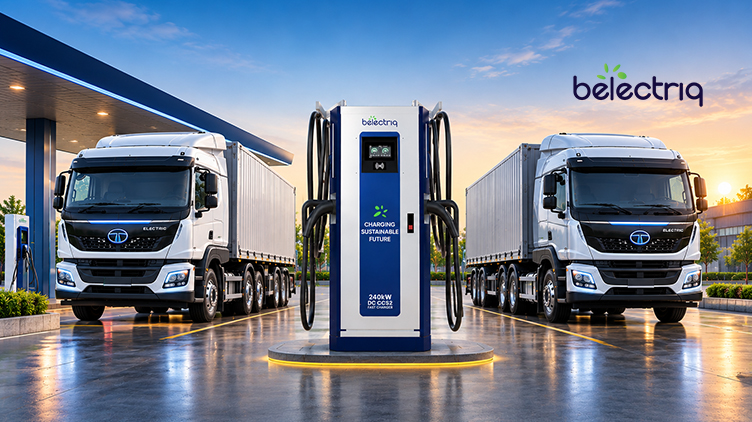
The transition towards electric trucks is creating new opportunities for logistics companies, fleet operators and commercial transportation businesses. While electric trucks can help reduce fuel and maintenance expenses, charging infrastructure efficiency also plays an important role in controlling overall operational costs.
For fleet operators managing multiple electric trucks, even small improvements in charging efficiency can make a difference in long-term electricity expenses. Selecting the right high-efficiency DC fast charger can help minimise power conversion losses, improve charging operations and support better utilisation of charging infrastructure.
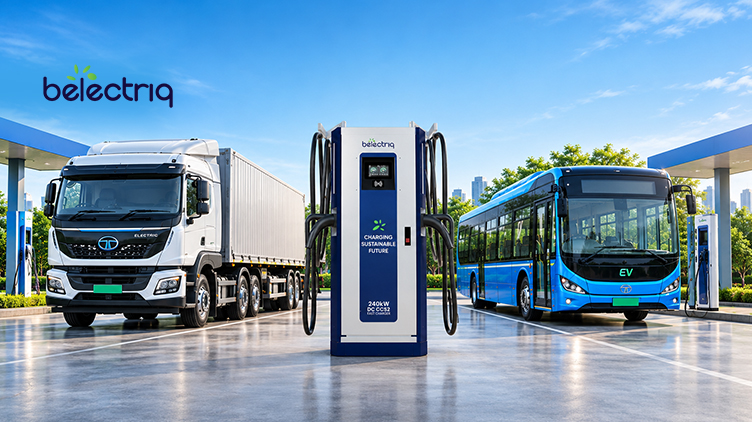
Belectriq offers high-efficiency DC CCS2 fast EV charging solutions ranging from 160 kW to 480 kW, designed to support the charging requirements of electric trucks, buses and commercial fleets.
Understanding the Operational Cost Challenges of Electric Truck Charging
Electric truck operators need charging infrastructure capable of supporting high energy demands and demanding transportation schedules. However, inefficient charging systems and poorly planned charging infrastructure can increase operating expenses.
Some common challenges include:
1. Energy Losses During Charging
Power conversion losses occur when electrical energy is converted into the DC power required by an EV battery. Lower charger efficiency can increase the amount of electricity drawn from the grid for the same energy delivered to the vehicle.
2. High Electricity Consumption
Commercial fleets consume significant amounts of electricity due to frequent charging cycles. Even a small percentage of avoidable energy losses can add to annual electricity expenses.
3. Vehicle Downtime
Longer charging periods can affect fleet availability, vehicle utilisation and delivery schedules.
4. Infrastructure Utilisation
Insufficient charging capacity or poor charging management can create operational bottlenecks, particularly when multiple trucks require charging.
5. Growing Fleet Requirements
As electric truck fleets expand, charging infrastructure must support increasing energy demand without unnecessarily increasing operating costs.
The Solution: High-Efficiency 160 kW–480 kW DC Fast Chargers
High-efficiency DC fast chargers can help address these challenges by reducing power conversion losses and supporting faster charging operations for compatible electric trucks.
Belectriq’s 160 kW–480 kW DC CCS2 fast EV charging solutions are designed for commercial vehicle charging applications, combining advanced power electronics with high-power charging capabilities.
How High-Efficiency Chargers Help Reduce Operational Costs
1. Lower Electricity Losses
Charger efficiency directly affects the electricity required to deliver a specific amount of energy to an EV battery.
For example, a charger with higher conversion efficiency requires less input energy to deliver the same output energy compared with a less efficient charger.
This can help reduce electricity expenses over repeated charging cycles.
2. Reduced Charging Downtime
High-power DC charging supports faster energy delivery when the electric truck and its battery management system can accept the available charging power.
Reduced charging time can help improve vehicle availability and support more efficient fleet scheduling.
3. Better Fleet Productivity
With suitable charging capacity and charging schedules, fleet operators can manage vehicle charging more effectively, minimise waiting periods and improve utilisation.
4. Improved Energy Management
Efficient charging infrastructure combined with intelligent power management can help optimise electricity consumption, manage charging demand and improve the utilisation of available electrical capacity.
5. Long-Term Infrastructure Value
Selecting suitable charging capacity from the beginning can help fleet operators prepare for increasing vehicle numbers and future charging requirements.
Understanding the Cost Savings: A Practical Example
Consider a commercial electric truck fleet that requires 1,000 kWh of energy delivered to vehicle batteries every day.
Compare two hypothetical DC fast chargers with different conversion efficiencies.
Assumptions:
- Daily energy delivered to vehicle batteries: 1,000 kWh
- Charger A efficiency: 95%
- Charger B efficiency: 97%
- Electricity tariff: ₹8 per kWh
- Charging demand remains constant.
| Particulars | Charger A | Charger B |
|---|---|---|
| Charging efficiency | 95% | 97% |
| Energy delivered to batteries | 1,000 kWh | 1,000 kWh |
| Electricity consumed | 1,052.63 kWh | 1,030.93 kWh |
| Daily electricity cost | ₹8,421 | ₹8,247 |
Estimated savings:
- Daily electricity savings: Approximately ₹175
- Monthly savings (30 days): Approximately ₹5,208
- Annual savings (365 days): Approximately ₹63,596
This example demonstrates how improving charger efficiency from 95% to 97% can reduce electricity consumption for the same battery energy delivered.
Note: These are illustrative calculations, not actual Belectriq customer savings or verified product performance figures. Actual savings depend on charger efficiency under operating conditions, electricity tariffs, load profile and charging demand.
Why Choose Belectriq for Commercial EV Charging?
Belectriq provides advanced EV charging solutions designed to meet the evolving requirements of commercial electric mobility.
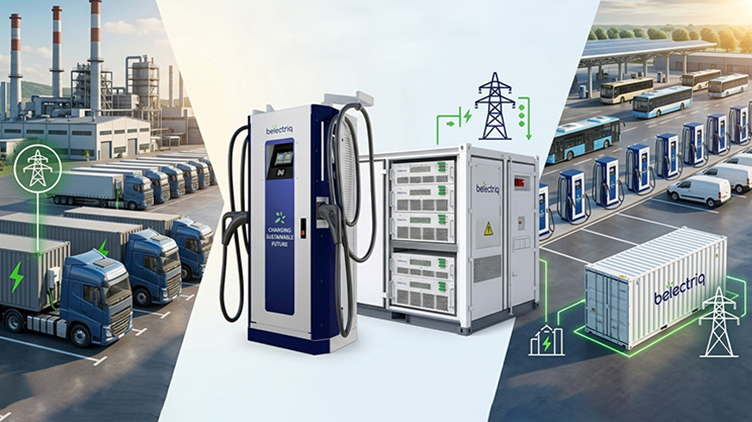
Its 160 kW–480 kW DC CCS2 fast charging range supports applications such as:
- Electric truck charging infrastructure.
- Electric bus fleet charging.
- Commercial fleet charging depots.
- Logistics and transportation hubs.
- Highway and public DC fast charging stations.
With advanced power electronics and high-efficiency charging technology, Belectriq supports businesses looking to develop reliable and efficient commercial EV charging infrastructure.
Conclusion: Improve Charging Efficiency and Control Operational Costs
For electric truck fleet operators, reducing operational costs involves more than switching from conventional fuel to electricity. Charging efficiency, vehicle utilisation, energy management and infrastructure planning all contribute to long-term cost optimisation.
High-efficiency DC fast chargers can help minimise power conversion losses, reduce charging-related downtime and improve charging infrastructure utilisation.
Belectriq’s 160 kW–480 kW DC CCS2 fast EV charging solutions are designed to support the growing power requirements of electric trucks, buses and commercial fleets.
FAQs
1. How do high-efficiency EV chargers reduce operational costs?
High-efficiency EV chargers reduce power conversion losses, helping minimise electricity consumption for the same amount of energy delivered to the vehicle battery.
2. How does charger efficiency affect electric truck charging costs?
Lower charger efficiency results in higher electricity consumption to deliver the same battery energy. Higher efficiency can help reduce electricity expenses over repeated charging cycles.
3. Which DC fast charger capacity is suitable for electric trucks?
DC fast chargers ranging from 160 kW to 240 kW can support compatible electric trucks. The appropriate capacity depends on battery specifications, vehicle charging limits and fleet requirements.
4. Can high-power DC chargers reduce electric truck downtime?
Yes. High-power DC chargers can reduce charging time when the vehicle supports the available charging power and battery conditions allow it.
5. What factors affect the operational cost of electric truck charging?
Major factors include charger efficiency, electricity tariffs, battery capacity, charging frequency, peak demand charges, vehicle utilisation and charging infrastructure maintenance.
Looking to reduce charging-related operational expenses for your electric truck fleet?
Connect with Belectriq to explore high-efficiency DC fast charging solutions for your commercial EV infrastructure.
Website: https://belectriq.co/
Email: sales@belectriq.co

Leave a Reply