
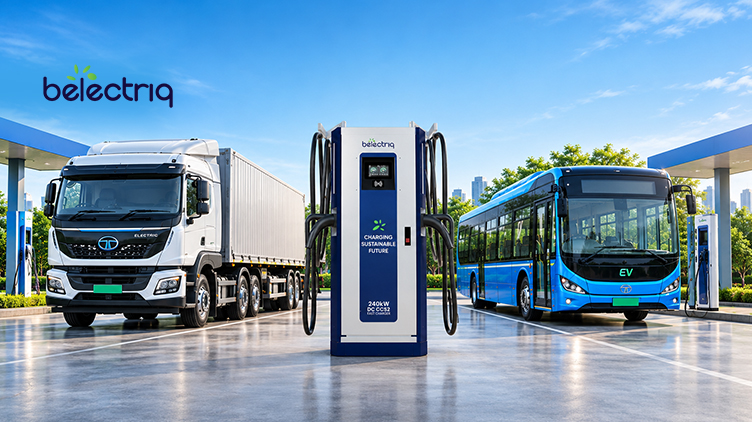
The rapid growth of electric mobility is transforming the commercial transportation industry. Electric buses and trucks are increasingly being adopted across public transportation, logistics, freight and industrial operations. As the adoption of heavy electric vehicles increases, the demand for high-power, reliable and efficient charging infrastructure is also growing.
Unlike passenger electric cars, electric buses and trucks require higher charging capacities to support large battery packs, demanding operating schedules and continuous fleet utilisation. To meet these requirements, Belectriq offers advanced DC fast charging solutions ranging from 160 kW to 480 kW, designed for commercial electric vehicles and heavy-duty fleet applications.
Understanding the Charging Challenges of Electric Buses & Trucks
Commercial electric vehicles have different charging requirements compared to passenger EVs. Fleet operators need charging infrastructure that delivers high power, supports operational efficiency and accommodates increasing vehicle energy demands.
Some of the major challenges include:
1. High Power Requirements: Electric buses and trucks have larger battery capacities and require high-power DC charging infrastructure.
2. Limited Charging Time: Commercial vehicles operate on demanding schedules, making fast and efficient charging essential to minimise downtime.
3. Operational Reliability: Fleet operators require dependable charging infrastructure to support regular vehicle operations.
4. Infrastructure Scalability: Charging systems must accommodate growing fleet sizes and increasing power requirements.
5. Energy Efficiency: Efficient power conversion helps minimise energy losses and optimise charging operations.
Belectriq’s Solution: 160 kW–480 kW DC CCS2 Fast EV Chargers

Belectriq provides high-efficiency DC CCS2 fast EV charging solutions with power capacities ranging from 160 kW to 480 kW. Designed for heavy commercial electric vehicles, these chargers support the demanding charging requirements of electric buses, trucks and commercial fleets.
With advanced power electronics, intelligent charging control and high-efficiency power conversion technology, Belectriq’s DC fast chargers provide a suitable solution for high-power commercial EV charging infrastructure.
Key Features of Belectriq DC Fast Charging Solutions
1. High-Power Charging Capacity (160 kW–480 kW)
Available in 160 kW, 180 kW, 240 kW, 360 kW and 480 kW configurations, the charging range supports different commercial EV charging requirements and fleet infrastructure needs.
2. High-Efficiency Power Conversion
Advanced power conversion technology is designed to deliver efficient energy utilisation while minimising power conversion losses.
3. CCS2 Charging Compatibility
CCS2 charging interfaces support compatible electric buses, trucks and other commercial electric vehicles.
4. Intelligent Charging Management
Advanced charging control and power management capabilities help support efficient charging operations.
5. Designed for Commercial Applications
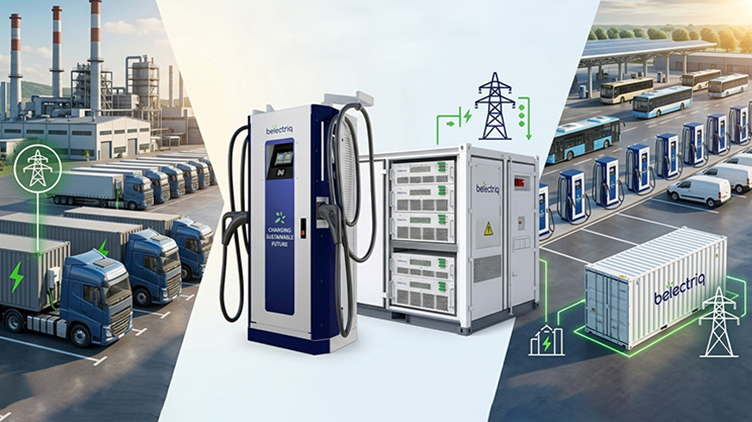
The chargers are suitable for fleet depots, electric bus terminals, logistics hubs, highway charging stations and industrial EV charging facilities.
Applications of 160 kW–480 kW DC Fast Chargers
Belectriq’s high-power DC charging solutions are designed to support a wide range of commercial electric mobility applications.
- Electric Bus Charging: High-power DC charging infrastructure for public transport operators and private electric bus fleets.
- Electric Truck Charging: Fast charging solutions for electric freight, logistics and heavy-duty commercial vehicles.
- Commercial Fleet Depots: Centralised charging infrastructure for managing multiple electric vehicles.
- Highway Charging Infrastructure: High-power charging solutions for commercial EVs operating on long-distance routes.
- Industrial & Logistics Facilities: EV charging infrastructure for electric transportation and logistics operations.
Benefits of High-Power DC Fast Charging Infrastructure
Deploying 160 kW–480 kW DC fast chargers can help commercial fleet operators improve charging infrastructure utilisation and operational efficiency.
Key benefits include:
- Supports high-power charging requirements for heavy commercial EVs.
- Helps reduce vehicle charging downtime, depending on battery and vehicle specifications.
- Improves charging infrastructure utilisation.
- Supports demanding commercial fleet schedules.
- Provides flexible charging capacity options.
- Supports future expansion of commercial EV charging networks.
Conclusion: Advancing Commercial EV Charging Infrastructure
The transition towards electric buses and trucks requires advanced charging infrastructure capable of supporting high-power requirements, operational efficiency and growing fleet demands.
Belectriq’s 160 kW–480 kW DC CCS2 fast EV charging solutions are designed to address the evolving requirements of commercial electric mobility. With advanced power electronics, high-efficiency charging technology and flexible power configurations, Belectriq supports the development of reliable charging infrastructure for electric buses, trucks and commercial fleets.
FAQs
1. What is a DC fast charger for electric buses and trucks?
A DC fast charger supplies direct current (DC) power to an electric vehicle’s battery, enabling high-power charging. It is suitable for electric buses, trucks and commercial fleets with high energy requirements.
2. What charging capacities are available in Belectriq DC fast chargers?
Belectriq offers DC CCS2 fast EV charging solutions ranging from 160 kW to 480 kW, designed for electric buses, trucks and commercial fleet applications.
3. How do 160 kW–480 kW DC fast chargers benefit electric bus and truck operators?
These high-power chargers help reduce charging downtime, improve charging infrastructure utilisation and support demanding commercial fleet schedules, depending on vehicle battery specifications.
4. Are Belectriq DC fast chargers compatible with electric buses and trucks?
Belectriq’s DC CCS2 fast chargers are designed for compatible electric buses, trucks and other commercial electric vehicles that support CCS2 charging.
5. What is the difference between AC charging and DC fast charging?
AC chargers supply alternating current, which is converted into DC by the vehicle’s onboard charger. DC fast chargers supply DC power directly to the vehicle battery, supporting higher charging capacities.
6. Where can 160 kW–480 kW DC fast chargers be installed?
These chargers are suitable for electric bus depots, truck charging stations, logistics hubs, commercial fleet facilities, highway charging stations and industrial locations.
7. How long does it take to charge an electric bus or truck using a 240 kW DC charger?
Charging time depends on battery capacity, current state of charge, vehicle charging limits, battery temperature and charger output. A 240 kW charger can support high-power charging when the vehicle is compatible.
8. What is CCS2 charging technology?
CCS2 (Combined Charging System Type 2) is a DC fast charging standard widely used in electric vehicles. It supports high-power DC charging through a compatible charging connector.
9. What factors should fleet operators consider when selecting a DC fast EV charger?
Fleet operators should consider vehicle battery capacity, maximum charging power, connector compatibility, charging requirements, available electrical infrastructure, efficiency, safety features and future scalability.
10. Does Belectriq provide EV charging solutions for commercial fleets?
Yes. Belectriq offers AC and DC EV charging solutions, including 160 kW–480 kW DC CCS2 fast chargers, for commercial electric vehicles, fleet operators and charging infrastructure applications.
Looking for high-power DC fast charging solutions for your electric bus or truck fleet?
Connect with Belectriq for customised EV charging solutions.
Website: https://belectriq.co/
Email: sales@belectriq.co

Leave a Reply