
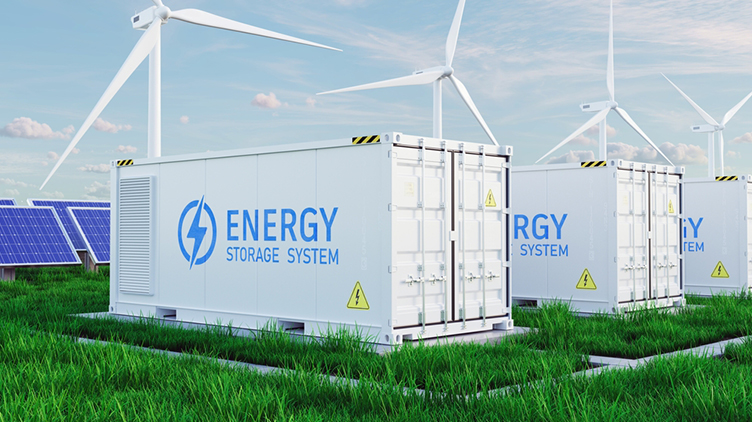
Battery Energy Storage Systems (BESS) are playing a critical role in modern energy infrastructure by enabling reliable power supply, renewable energy integration, and efficient energy management. One of the most important factors that determines the performance, safety, and efficiency of a BESS installation is the type of battery technology used.
Different battery chemistries offer unique advantages depending on the application, operating conditions, and energy requirements. Understanding the types of batteries used in Battery Energy Storage Systems (BESS) helps industries choose the most suitable energy storage solution.
1. Lithium-Ion Batteries
Lithium-ion batteries are the most widely used technology in modern Battery Energy Storage Systems due to their high energy density, efficiency, and long cycle life.
These batteries are commonly used in industrial energy storage, electric vehicles, and renewable energy systems. Lithium-ion batteries can store large amounts of energy in a compact space, making them ideal for applications where efficiency and performance are important.
Key Advantages
- High energy density
- Fast charging and discharging capability
- Long cycle life
- High round-trip efficiency
Applications
- Grid-scale energy storage
- Renewable energy storage systems
- Commercial and industrial energy storage
- Electric vehicle charging infrastructure
However, lithium-ion batteries require advanced battery management and thermal management systems to ensure safe operation.
2. Lithium Iron Phosphate (LFP) Batteries
Lithium Iron Phosphate (LFP) is a type of lithium-ion battery chemistry that is widely used in modern Battery Energy Storage Systems due to its high safety, stability, and long lifespan.
LFP batteries are becoming increasingly popular for industrial and grid-scale energy storage because they offer excellent thermal stability and lower risk of overheating compared to other lithium battery chemistries.
Key Advantages
- Excellent thermal and chemical stability
- Longer lifecycle compared to many lithium-ion variants
- Higher safety levels
- Lower risk of thermal runaway
Applications
- Industrial battery energy storage systems
- Renewable energy storage
- Utility-scale energy storage projects
- Microgrid and backup power systems
Because of their durability and safety features, LFP batteries are widely considered one of the most reliable battery technologies for large-scale BESS installations.
3. Lead-Acid Batteries
Lead-acid batteries are one of the oldest and most established energy storage technologies. Although they are less commonly used in modern large-scale BESS compared to lithium batteries, they are still used in certain applications where cost considerations are important.
Key Advantages
- Lower initial cost
- Mature and well-understood technology
- Widely available
Limitations
- Lower energy density
- Shorter cycle life
- Higher maintenance requirements
Lead-acid batteries are typically used in backup power systems and smaller energy storage applications.
4. Flow Batteries
Flow batteries are an emerging technology used for large-scale energy storage applications. Unlike traditional batteries, flow batteries store energy in liquid electrolytes that circulate through the system.
Key Advantages
- Long lifespan with minimal degradation
- Suitable for large-scale and long-duration energy storage
- High operational safety
Applications
- Utility-scale energy storage
- Grid balancing
- Renewable energy integration
Although flow batteries offer promising benefits, their higher upfront costs and larger system size currently limit widespread adoption.
5. Sodium-Ion and Other Emerging Battery Technologies
New battery technologies such as sodium-ion batteries, solid-state batteries, and advanced hybrid storage systems are being developed to improve energy storage efficiency and reduce dependency on critical materials.
These technologies aim to provide:
- Improved safety
- Lower production costs
- Greater sustainability
While many of these technologies are still in development, they may play an important role in the future of large-scale battery energy storage systems.
Conclusion
Battery Energy Storage Systems rely on advanced battery technologies to deliver efficient, reliable, and scalable energy storage solutions. Among the available options, lithium-ion and lithium iron phosphate (LFP) batteries currently dominate the BESS market due to their high efficiency, long lifespan, and strong safety performance.
Other technologies such as lead-acid, flow batteries, and emerging battery chemistries also serve specific energy storage applications. Choosing the right battery technology depends on factors such as system size, energy requirements, safety considerations, and operational costs.
As the demand for renewable energy and smart grid solutions continues to grow, battery technology will remain a key driver of innovation in energy storage systems.

Leave a Reply