
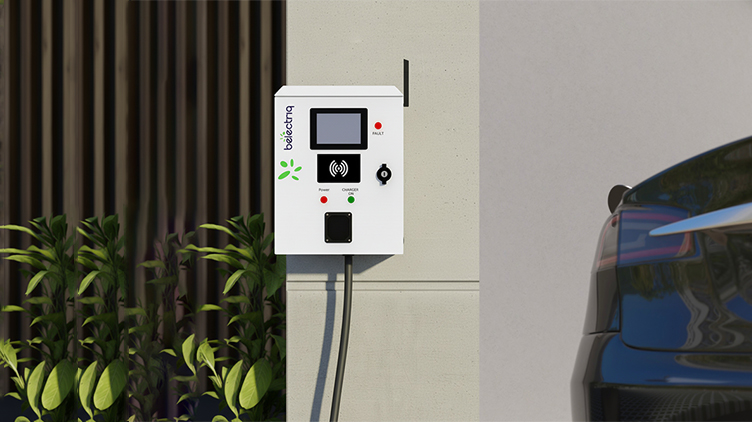
As electric vehicle adoption accelerates worldwide, the demand for reliable charging infrastructure is rising at the same pace. Businesses—ranging from startups to established energy companies—are entering the EV charging market, not by building products from scratch but through a smarter, faster strategy: white label EV chargers.
White labeling allows companies to offer branded charging stations without spending years on R&D, manufacturing, and certifications. Instead, they collaborate with manufacturers who supply high-quality hardware and software, while the business focuses on branding, deployment, operations, and customer experience.
Below is a clear breakdown of why white labeling matters from an end user’s perspective.
Faster Go-to-Market Time
Developing an EV charger from scratch requires engineering design, safety certifications, protocol development, firmware testing, and field trials—often taking 7–8 years.
With white label chargers, businesses skip this entire development cycle.
This allows them to:
- Launch products within weeks or months
- Establish a strong market presence quickly
- Respond faster to government tenders and infrastructure projects
Speed is a critical advantage in a fast-growing, competitive EV market.
Zero Manufacturing Investment
Building EV chargers in-house requires:
- Factories and production lines
- Component sourcing and vendor management
- Quality checks and testing facilities
- Compliance and certification processes
A white label model removes these heavy costs. Businesses only invest in branding, software platforms, and sales. It is ideal for:
- Startups
- Charge Point Operators (CPOs)
- Industrial customers
- Real estate developers
- OEMs
This drastically reduces financial risk while opening doors to a high-growth sector.
Customized Branding & User Experience
White label solutions allow companies like Belectriq to fully customize both AC and DC chargers with:
- Brand logo and corporate colors
- Mobile app or RFID-based access
- Custom pricing, billing, and dashboards
- Smart charging features
- OCPP compatibility for roaming and network integration
This gives businesses a unique identity within the EV charging ecosystem—without the need for manufacturing capabilities.
A Scalable Business Model
White label EV chargers support seamless scaling. Businesses can start with small volumes and expand as their network grows. Manufacturers typically provide:
- Flexible MOQ (minimum order quantity)
- Technical support
- Spare parts and maintenance
- Cloud-based software access
- Warranty and certifications
This makes it easier to scale from a local deployment to a city-wide or national charging network.
Access to Proven, Reliable Technology
White label charger manufacturers already handle critical technical aspects such as:
- Safety certifications (CE, ARAI, ISO, I-CAT, etc.)
- Firmware upgrades
- OCPP/CMS compatibility
- Payment gateway integration
Instead of experimenting with prototypes, businesses get reliable, tested, field-proven hardware from day one.
Suitable for Multiple Business Models
White label chargers fit effortlessly into diverse business models and monetization strategies, such as:
- Public charging stations
- Residential charging installations
- Corporate fleet charging
- Charging-as-a-Service (CaaS)
- Subscription-based hardware leasing
This flexibility makes it appealing to various industries entering the EV landscape.
Government Incentives & Tender Opportunities
Countries including India, the US, UK, and EU are accelerating EV infrastructure through:
- Subsidies
- Tax incentives
- Public–private partnership programs
White label-ready products allow companies to participate quickly in these tenders using pre-certified hardware.
Who Is Choosing White Label EV Chargers?
Some of the most active adopters today include:
• Solar EPC contractors
• Energy and utility providers
• EV charging startups
• IT parks and tech campuses
• Real estate developers and commercial builders
• Automobile dealerships
• Corporate fleet operators
• Bus depots and transport hubs
• Restaurant and café owners
For all these sectors, white labeling offers an affordable, fast, and reliable way to enter the EV charging market.
Final Thoughts
The EV industry is expanding at an unprecedented pace, and businesses that move quickly will become market leaders. White label EV chargers remove the traditional barriers of cost, complexity, and time—while still enabling strong branding, customer ownership, and premium user experience.
For any business aiming to enter the EV charging market without investing in hardware development, white labeling is one of the smartest and fastest pathways forward.

Leave a Reply